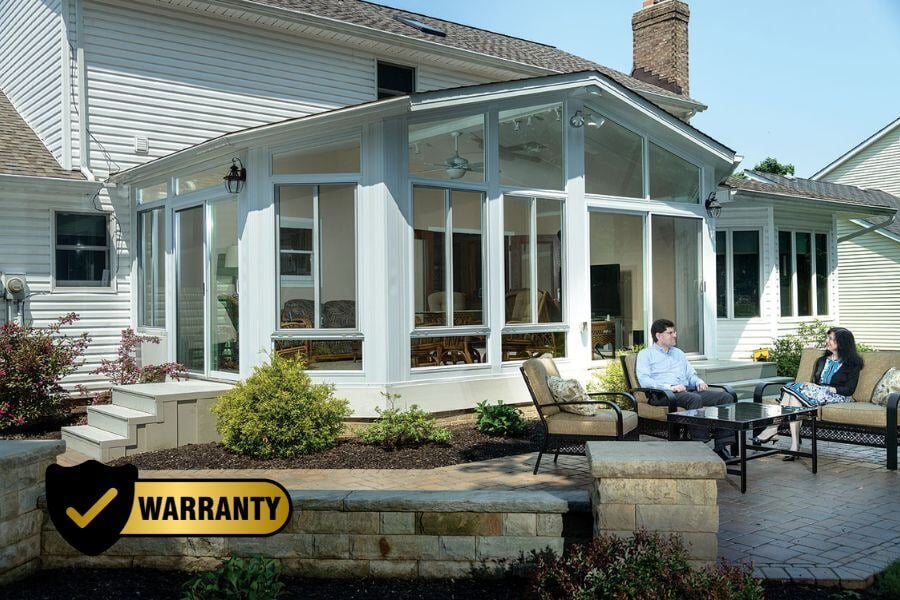
Executive Summary
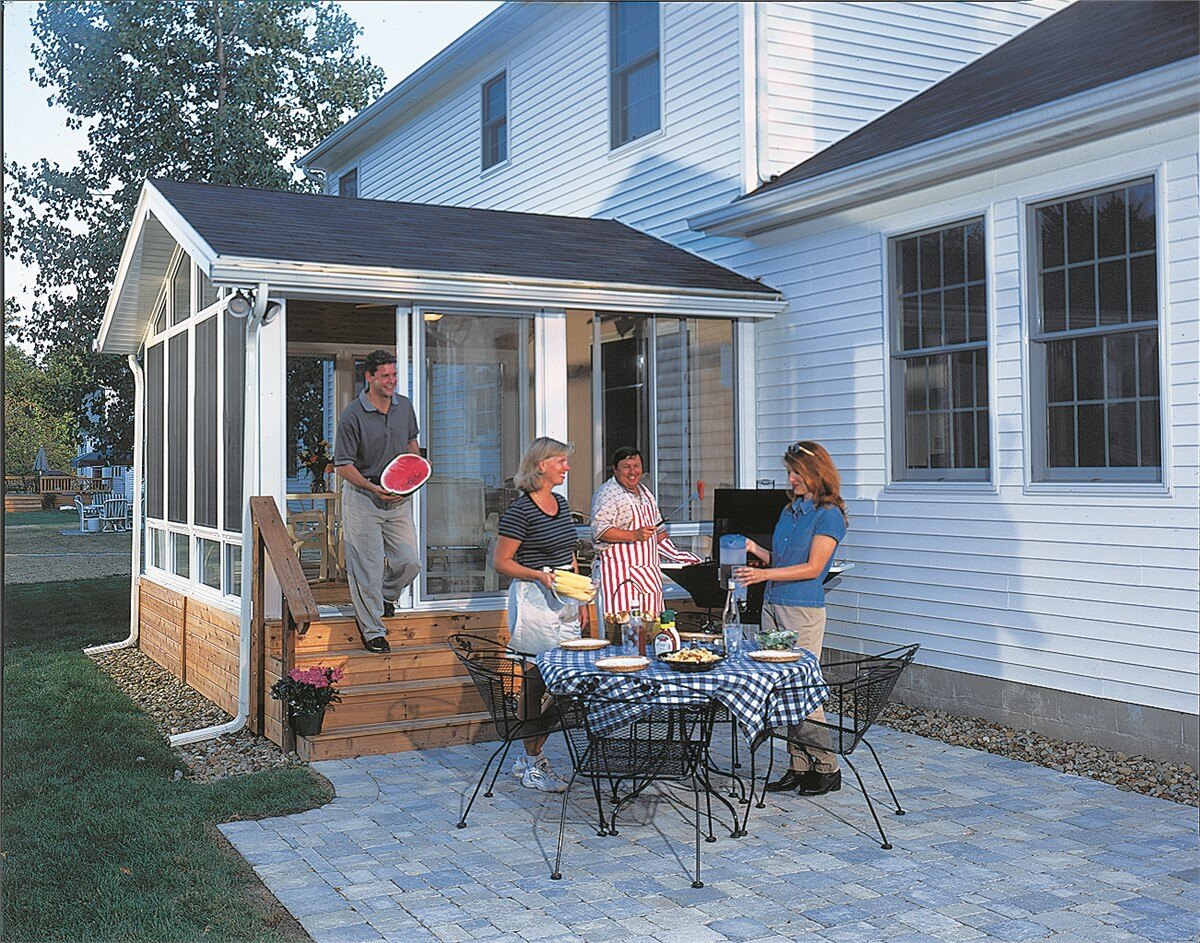
A 3-season sunroom is generally designed for comfortable use during spring, summer, and fall. It is often the more budget-friendly choice for homeowners who mainly want a bright place to relax, entertain, or enjoy outdoor views during milder weather.
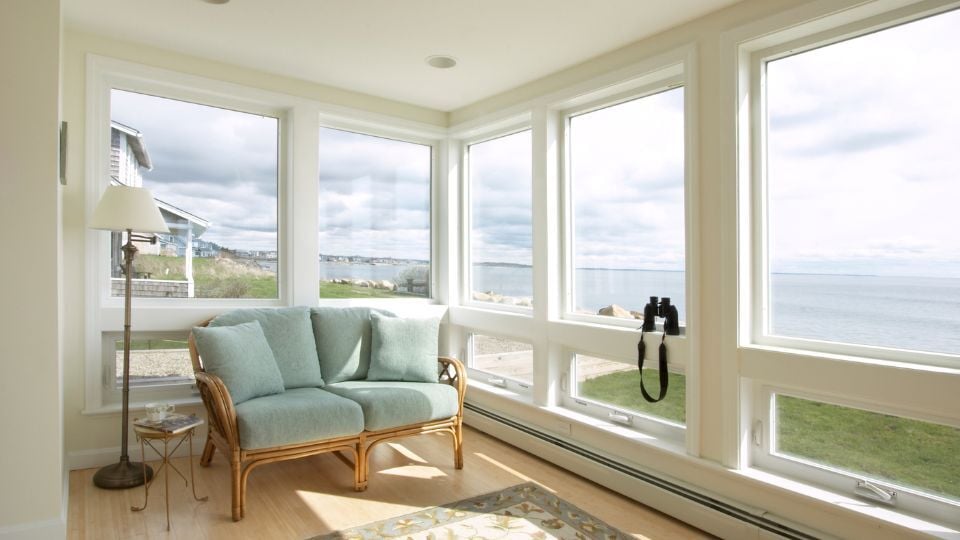
A 4-season sunroom, sometimes called a year-round sunroom, includes more insulation, higher-performing glass, and climate-control options. It is usually the better choice when you want dependable living space during both hot summers and cold winters.
The right option depends on how often you want to use the room, your local climate, your comfort expectations, and your project budget.
Ready to compare your options? Book a Sunroom Design Consultation with Joyce Windows, Sunrooms & Baths.
What Is the Main Difference Between a 3-Season and 4-Season Sunroom?
The main difference is how the room is built to handle changing temperatures.
A 3-season sunroom provides protection from rain, wind, insects, and other outdoor conditions, but it is not typically designed to remain as comfortable as the rest of your home during extreme heat or cold.
A 4-season sunroom uses a more complete comfort system. Its glass, framing, roof, insulation, foundation, and heating or cooling options work together to support more consistent year-round use.
Although the two room types may look similar from the outside, their construction and performance can be very different.
3-Season vs. 4-Season Sunroom Comparison
| Feature | 3-Season Sunroom | 4-Season Sunroom |
|---|---|---|
| Typical use | Spring, summer, and fall | All four seasons |
| Best for | Relaxing, entertaining, dining, and seasonal hobbies | Daily living, working, dining, hobbies, and year-round relaxation |
| Insulation | Moderate or limited | More complete insulation system |
| Glass | Seasonal glass package | Higher-performing insulated glass |
| Heating and cooling | Fans, portable units, or occasional supplemental heat | Designed to support more consistent heating and cooling |
| Initial investment | Usually lower | Usually higher |
| Winter comfort | Limited during colder weather | Built for greater cold-weather comfort |
| Connection to outdoors | Strong seasonal indoor-outdoor feel | Outdoor views with more indoor-style comfort |
What Is a 3-Season Sunroom?
A 3-season sunroom is designed to extend the time you can comfortably enjoy an outdoor-facing space.
It can provide a bright, protected place for:
- Morning coffee
- Family meals
- Reading and relaxing
- Entertaining guests
- Children’s activities
- Plants and seasonal hobbies
Because it generally requires less insulation and a less advanced glass package than a year-round room, a 3-season sunroom usually has a lower starting investment.
However, it may become uncomfortable during very cold winter days or periods of extreme summer heat. A fan, portable air conditioner, fireplace, or supplemental heater may improve comfort, but those additions do not change the underlying thermal performance of the room.
A 3-season sunroom may be right for you when:
- You expect to use the room mainly during mild weather.
- You do not need it to feel like a traditional interior room all winter.
- You want a strong connection to your patio, deck, yard, or garden.
- Keeping the initial project cost lower is an important priority.
- You are comfortable closing the room during extreme temperatures.
What Is a 4-Season Sunroom?
A 4-season sunroom is designed to provide more consistent comfort throughout the year.
It typically includes more substantial insulation, higher-performing windows, and construction materials intended to reduce heat transfer. It may also include a dedicated heating and cooling solution, such as a mini-split system.
The U.S. Department of Energy explains that windows and glazing affect how much heat enters and leaves a space. Low-emissivity coatings, insulating glass, frame construction, and climate-appropriate window performance can all influence indoor comfort.
A 4-season room may function as:
- A home office
- An additional family room
- A dining or breakfast area
- A hobby or craft room
- A playroom
- A quiet reading space
- A year-round entertaining area
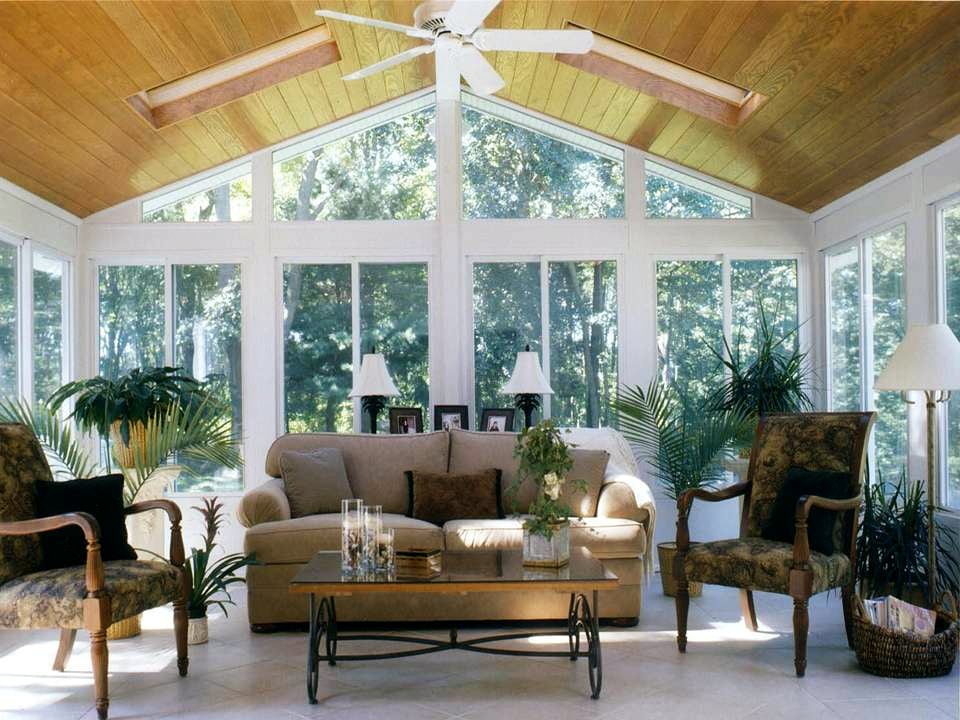
A 4-season sunroom may be right for you when:
- You want to use the room during winter and summer.
- You want the space to feel more like an extension of your home.
- You plan to work, dine, exercise, or relax there regularly.
- Temperature consistency is more important than the lowest initial price.
- You are willing to invest in additional insulation, glass performance, and climate control.
How Does the Glass Package Affect Sunroom Comfort?
Glass makes up a large portion of most sunrooms, so its performance can have a major effect on comfort.
Glass in a 3-season sunroom
A 3-season room may use a simpler glass package intended primarily for seasonal protection and enjoyment. Depending on the system selected, upgrades such as low-emissivity coatings may be available to help manage solar heat and ultraviolet exposure.
Glass in a 4-season sunroom
A year-round sunroom generally uses insulated glass designed to reduce heat movement through the windows.
Features may include:
- Multiple panes of glass
- Insulating gas between the panes
- Low-emissivity coatings
- Improved seals and spacers
- Frames designed to reduce heat transfer
ENERGY STAR notes that energy-efficient windows can use insulating glass, gas fills, advanced coatings, improved framing, weatherstripping, and other technologies to reduce unwanted heat gain and loss.
Joyce offers year-round sunroom systems with comfort-focused options such as SmartShield Glass. The appropriate glass package should be selected as part of the room’s complete design rather than treated as a stand-alone upgrade.
Why Do Insulation and Framing Materials Matter?
A sunroom’s windows are only one part of its thermal performance.
The walls, roof, floor, framing, foundation, doors, and connection to the home can all affect how comfortable the room feels.
A seasonal room may contain some insulation, but it is generally not built to the same level as a room intended for year-round use.
A 4-season sunroom requires a more complete approach. Weakness in one part of the room can make the entire space harder to heat or cool. For example, high-performing windows cannot fully compensate for an under-insulated roof or floor.
Joyce designs and installs custom three-season and four-season sunrooms using factory-direct systems. Available features include vinyl sunroom structures, SmartShield Glass, and the ClimateMaster roof system. Final recommendations depend on the home, room design, site conditions, and intended use.
Can You Heat and Cool Both Types of Sunrooms?
Yes, but the results may be different.
Heating and cooling a 3-season room
A ceiling fan, portable air conditioner, electric heater, or fireplace may help extend the number of comfortable days.
However, a seasonal room is not usually designed to retain conditioned air as effectively as a four-season system. Heating it continuously during a cold winter may be inefficient and may not produce the comfort you expect.
Heating and cooling a 4-season room
A four-season room is built to work more effectively with heating and cooling equipment.
Depending on the design and applicable building requirements, homeowners may consider a mini-split system or another approved comfort solution. Because the sunroom is often separated from the main house, it may be possible to condition the room when it is being used rather than heating or cooling it continuously.
Your design consultant should review room size, orientation, glass area, insulation, local climate, electrical needs, and equipment requirements before recommending a solution.
Which Sunroom Costs More?
A 4-season sunroom usually costs more than a comparable 3-season room because it commonly requires:
- More insulation
- Higher-performing glass
- More substantial roof and wall systems
- Additional foundation or floor preparation
- Heating and cooling provisions
- More extensive electrical or finishing work
A 3-season room is often the lower-cost option, but room type is only one pricing factor.
Sunroom cost can also be influenced by:
- Room dimensions
- Roof style
- Foundation requirements
- Existing patio or deck condition
- Number and style of windows and doors
- Electrical work
- Interior finishes
- Site access
- Local permits and code requirements
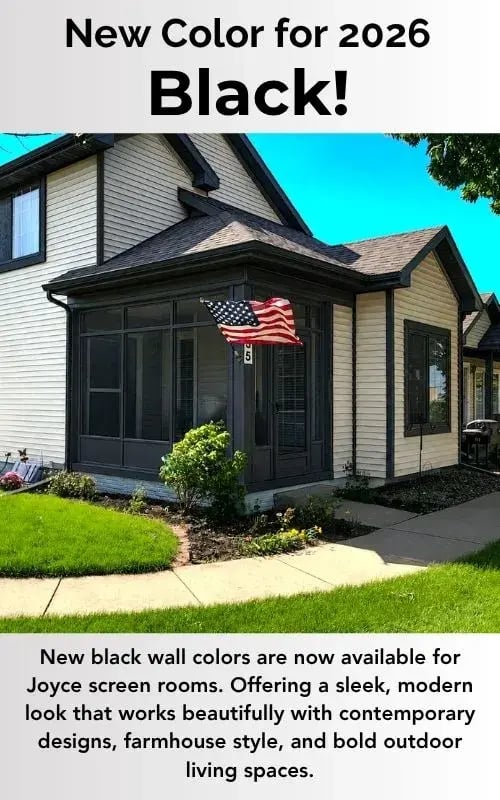
- Custom colors and design details
Joyce explains that the condition of an existing patio or deck must be evaluated before it can be used for a new room. Some structures may be suitable, while others may require reinforcement, modification, or replacement.
For a project-specific price, book a design consultation so the home, site, structure, and design goals can be reviewed.
Is a 4-Season Sunroom Always the Better Choice?
Not necessarily.
A 4-season sunroom provides more flexibility, but paying for year-round performance may not make sense when you only expect to use the room during mild weather.
For example, a homeowner who spends winter elsewhere and mainly wants an enclosed place for spring and fall gatherings may receive more value from a 3-season room.
By contrast, a family that needs a daily home office, play area, or dining space will probably place more value on year-round comfort.
The better choice is the room that matches how you will actually live.
.jpg?width=961&height=640&name=Gable%202600SL%20in%20White%20(3%20of%204).jpg)
Questions to Ask Before Choosing a Sunroom
Before selecting a room type, consider these questions:
- During which months do I want to use the room?
- Do I need the room to remain comfortable during freezing or very hot weather?
- Will this be an occasional retreat or everyday living space?
- How important is a lower initial investment?
- Will the room need dedicated heating and cooling?
- Is my existing patio, deck, or foundation suitable for an enclosure?
- Which direction will the room face?
- How much direct sunlight and shade will it receive?
- What local building and permit requirements apply?
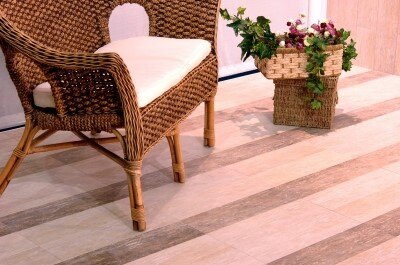
- Which glass, roof, wall, and flooring options fit my comfort goals?
Room orientation and surrounding shade can influence solar heat entering the space. The Department of Energy recommends considering orientation, windows, building materials, and landscaping together when planning spaces that receive significant sunlight.
How Joyce Helps You Compare Sunroom Options
Joyce Windows, Sunrooms & Baths designs, manufactures, and installs custom sunrooms, including three-season rooms, four-season rooms, patio and deck enclosures, screen rooms, and patio covers.
During a design consultation, a Joyce representative can help you review:
- How you plan to use the room
- Seasonal versus year-round comfort
- Room size and layout
- Glass and insulation options
- Roof styles
- Existing deck or patio conditions
- Heating, cooling, and electrical needs
- Design preferences
- Project pricing and financing options
Joyce serves homeowners in supported areas of Ohio, Pennsylvania, North Carolina, and South Carolina. Availability and product options may vary by location.
See what your project could cost. Book a Design Consultation to compare three-season and four-season sunroom options for your home.
Frequently Asked Questions
Can a 3-season sunroom be used in winter?
It may be usable on mild winter days with sunlight or supplemental heat, but it is not typically designed for dependable comfort during prolonged freezing conditions.
Can I turn a 3-season sunroom into a 4-season sunroom later?
Sometimes, but conversion can require more than adding a heater. The glass, framing, roof, walls, floor, foundation, electrical system, and building permits may all need to be evaluated. In some cases, designing a four-season room from the beginning may be more practical.
Does a 4-season sunroom need HVAC?
It needs an appropriate way to manage heating and cooling, but the exact system depends on the room and local requirements. A mini-split is one common option. Your contractor should calculate the room’s needs instead of choosing equipment based only on square footage.
Can Joyce build a sunroom on an existing deck or patio?
Possibly. Joyce must inspect the existing structure to determine whether it is level, stable, properly supported, and suitable for the weight and design of the proposed room.
Is a 3-season sunroom cheaper than a 4-season sunroom?
In most cases, yes. A 3-season room generally requires less insulation and a simpler glass package. The final price still depends on size, foundation, roof style, site conditions, finishes, and customization.
Does a sunroom add usable living space?
Both room types add protected space, but how the space is classified for appraisal, permitting, taxation, or real estate purposes depends on local rules and the room’s construction. Homeowners should verify those details with the appropriate local authorities and real estate professionals.
How long does sunroom installation take?
Timing depends on the room type, customization, permitting, site preparation, weather, and installation schedule. A design consultation is the best way to discuss the expected process for a specific property.
Final Takeaway
Choose a 3-season sunroom when you want an affordable, light-filled space primarily for spring, summer, and fall.
Choose a 4-season sunroom when you want more consistent comfort and a room that can function as everyday living space throughout the year.
The best decision should be based on your lifestyle, climate, home, comfort expectations, and budget—not simply the number of seasons in the room’s name.
Explore Joyce Sunrooms or book a design consultation to find the right fit for your home.
Topics: